Blog
Universal Article/Blog/News module
Delhi's Pollution
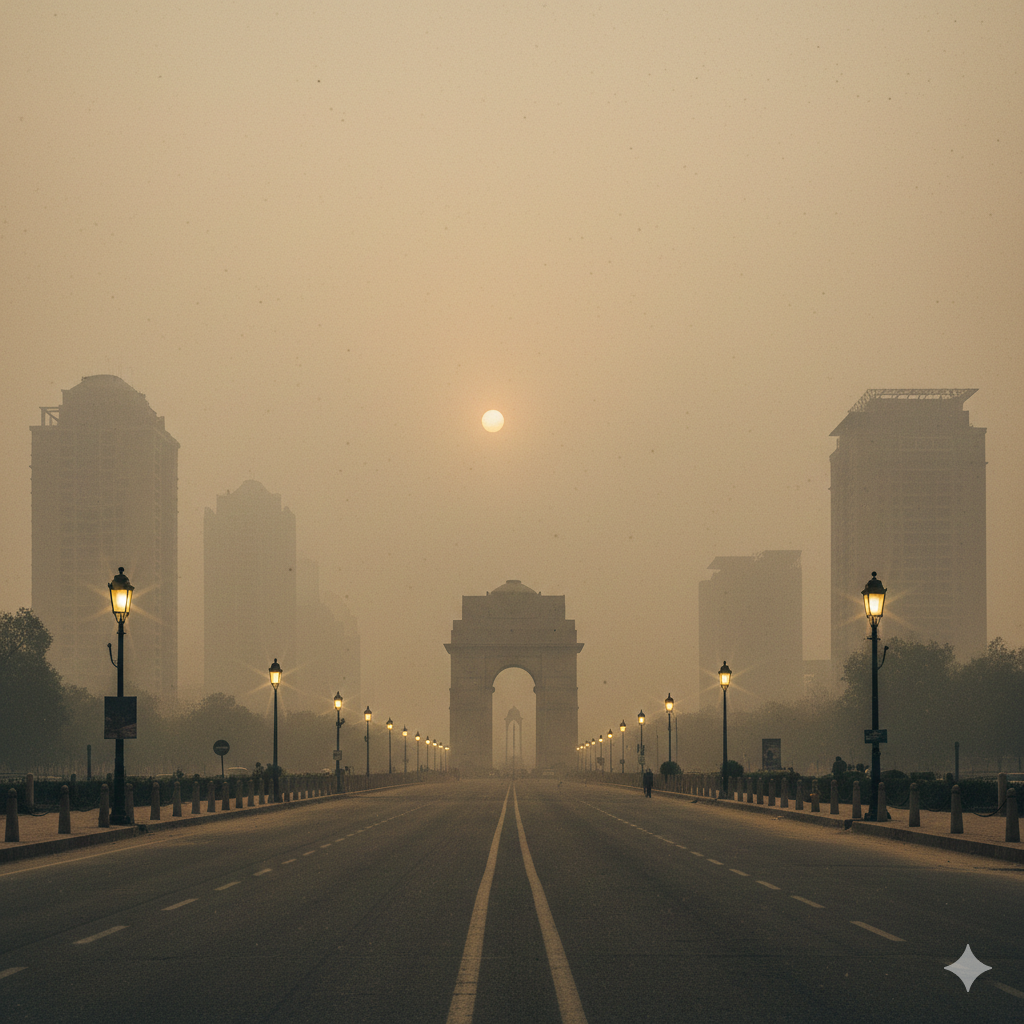
The history of air pollution in Delhi is a decades-long struggle between rapid urbanization and environmental sustainability. Once a city with a clear sky, Delhi now faces an annual winter crisis that has turned into a global case study for urban pollution management.
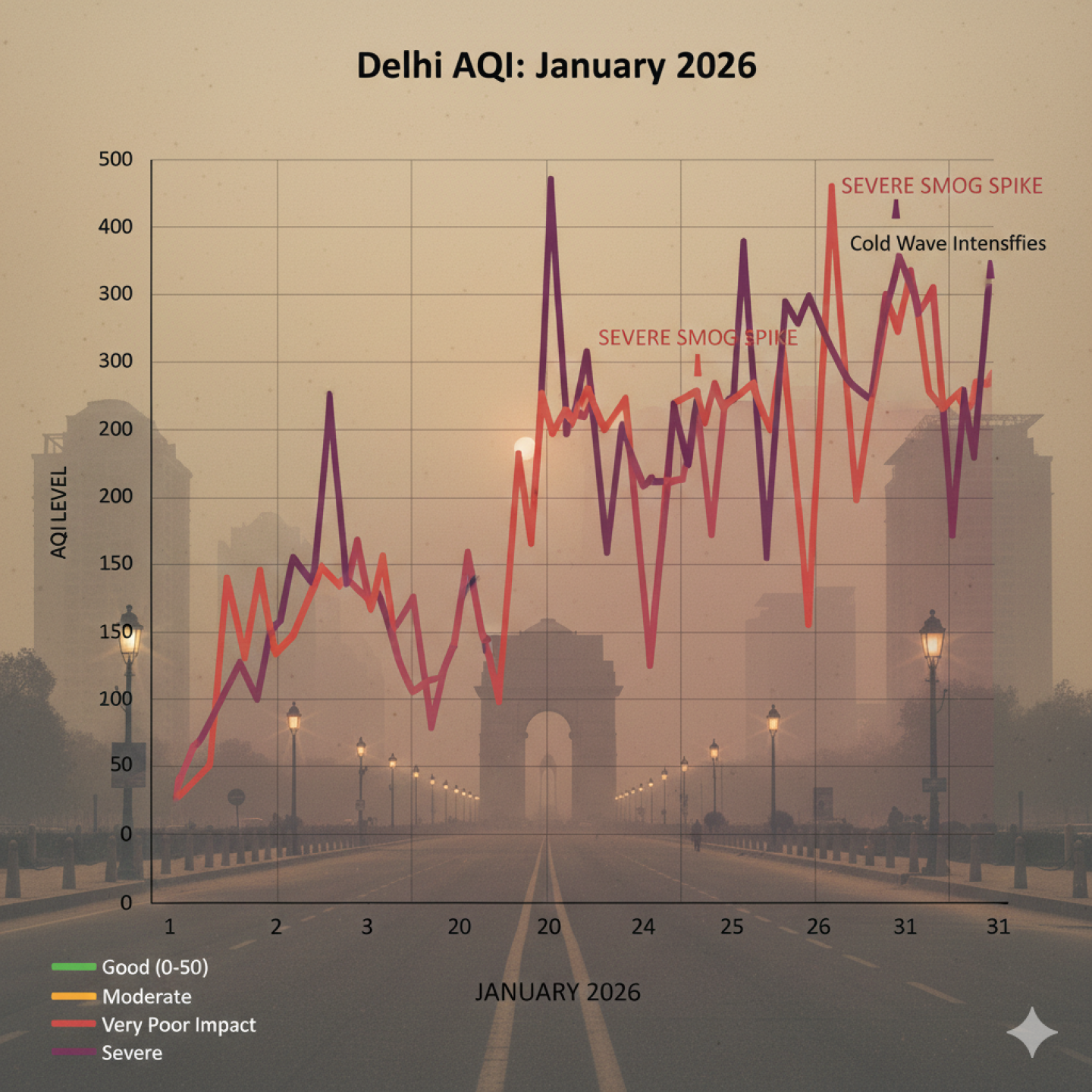
A Timeline of Delhi's Pollution History
Delhi's pollution history can be broken down into three distinct "eras" of intervention and crisis.
1. The 1990s: The Rise of the Supreme Court
In the early 90s, Delhi's air was already deteriorating due to old diesel buses and industrial expansion.
- 1996: Environmentalist M.C. Mehta won a landmark case in the Supreme Court, leading to the "shipting of industries" out of the city.
- 1998: The Supreme Court ordered the entire public transport fleet (buses and autos) to switch from diesel/petrol to CNG (Compressed Natural Gas). This was one of the world's most ambitious fuel shifts.
2. 2000–2015: The Growth Explosion
While CNG initially cleared the air, the city’s population and vehicle count exploded.
- 2002–2010: The Delhi Metro was launched, providing a massive relief to public transport. However, the number of private cars increased by over 10% annually.
- 2014: The World Health Organization (WHO) declared Delhi the most polluted city in the world, shocking the government into action.
3. 2016–2026: The "Smog Era"
This period is marked by "Severe" AQI levels and the declaration of public health emergencies.
- 2016 (The Great Smog): Following Diwali, Delhi saw its worst smog in 17 years, with PM2.5 levels hitting 999 (the max limit of sensors).
- 2017–2021: Introduction of the Graded Response Action Plan (GRAP), the Odd-Even car rationing scheme, and the ban on firecrackers.
- 2025–2026: Recent years have seen the pilot of "Artificial Rain" (cloud seeding) and a massive shift toward Electric Vehicles (EVs), though winter stubble burning remains a stubborn challenge.
The Solution: A Multi-Pronged Strategy
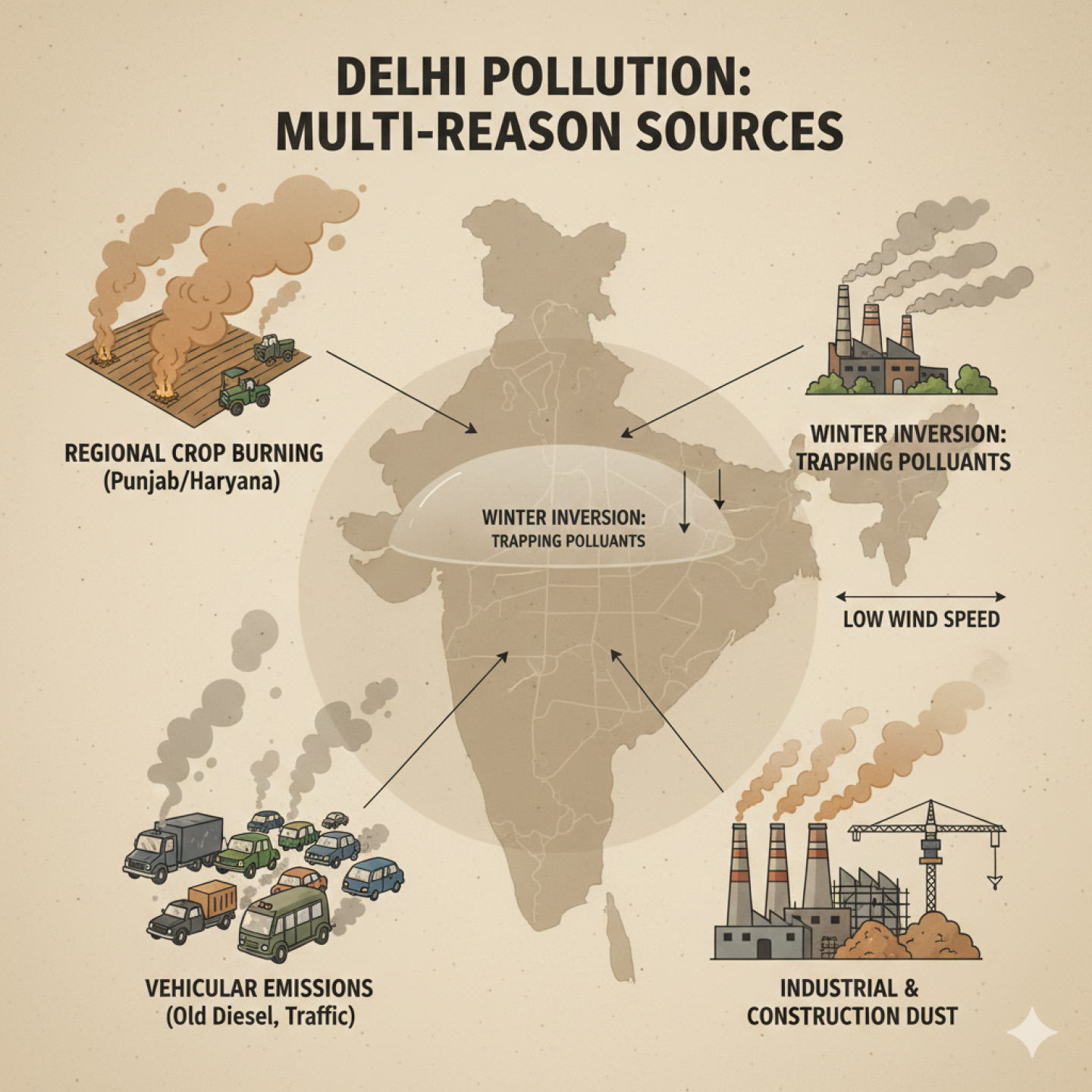
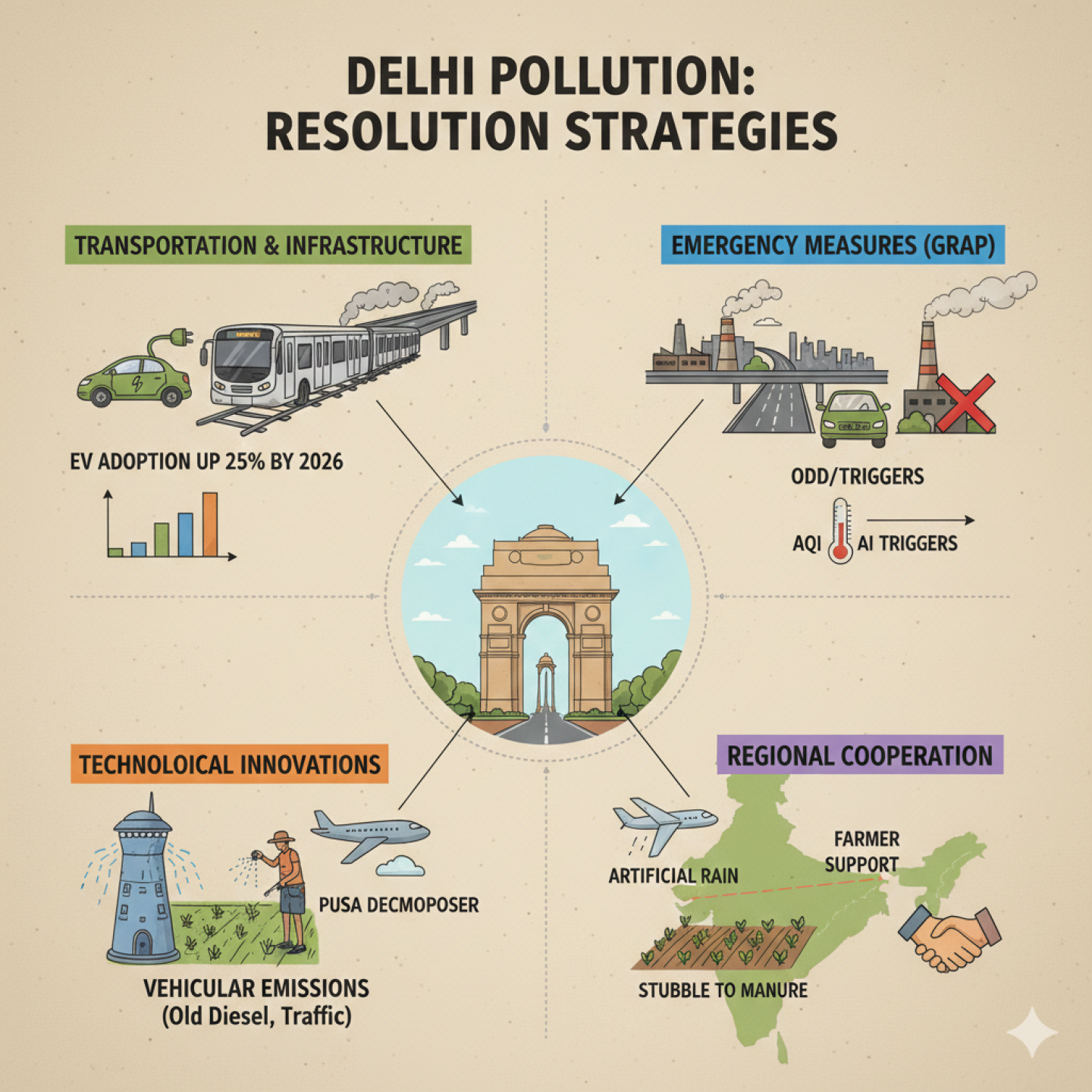
Solving Delhi's pollution requires tackling three main pillars: Vehicles, Industry, and Regional Crop Burning.
1. Transportation & Infrastructure
- EV Revolution: Delhi’s 2020 EV policy aimed for 25% of all new vehicle registrations to be electric by 2024. By 2026, the city has one of the highest EV adoption rates in India.
- Metro Expansion: The Delhi Metro network is currently undergoing Phase IV expansion to reduce the 12 million+ daily private vehicle trips.
- Peripheral Expressways: The Eastern and Western Peripheral Expressways now allow 60,000+ heavy trucks to bypass Delhi daily instead of driving through its center.
2. Emergency Measures (GRAP)
The Graded Response Action Plan automatically kicks in when air quality drops:
- Stage I-II: Banning coal use in hotels/eateries and increasing parking fees.
- Stage III-IV: Complete ban on non-essential construction and the entry of older diesel trucks.
3. Technological Innovations
- Smog Towers: Giant air purifiers installed at Connaught Place and Anand Vihar, though their city-wide effectiveness is still debated.
- Pusa Decomposer: A low-cost bio-enzyme developed by IARI that turns stubble into manure in 20 days, reducing the need for farmers to burn crop residue.
- Artificial Rain: In 2025, experiments with cloud seeding (using aircraft to spray salts) were conducted to "wash away" pollutants during peak smog days.
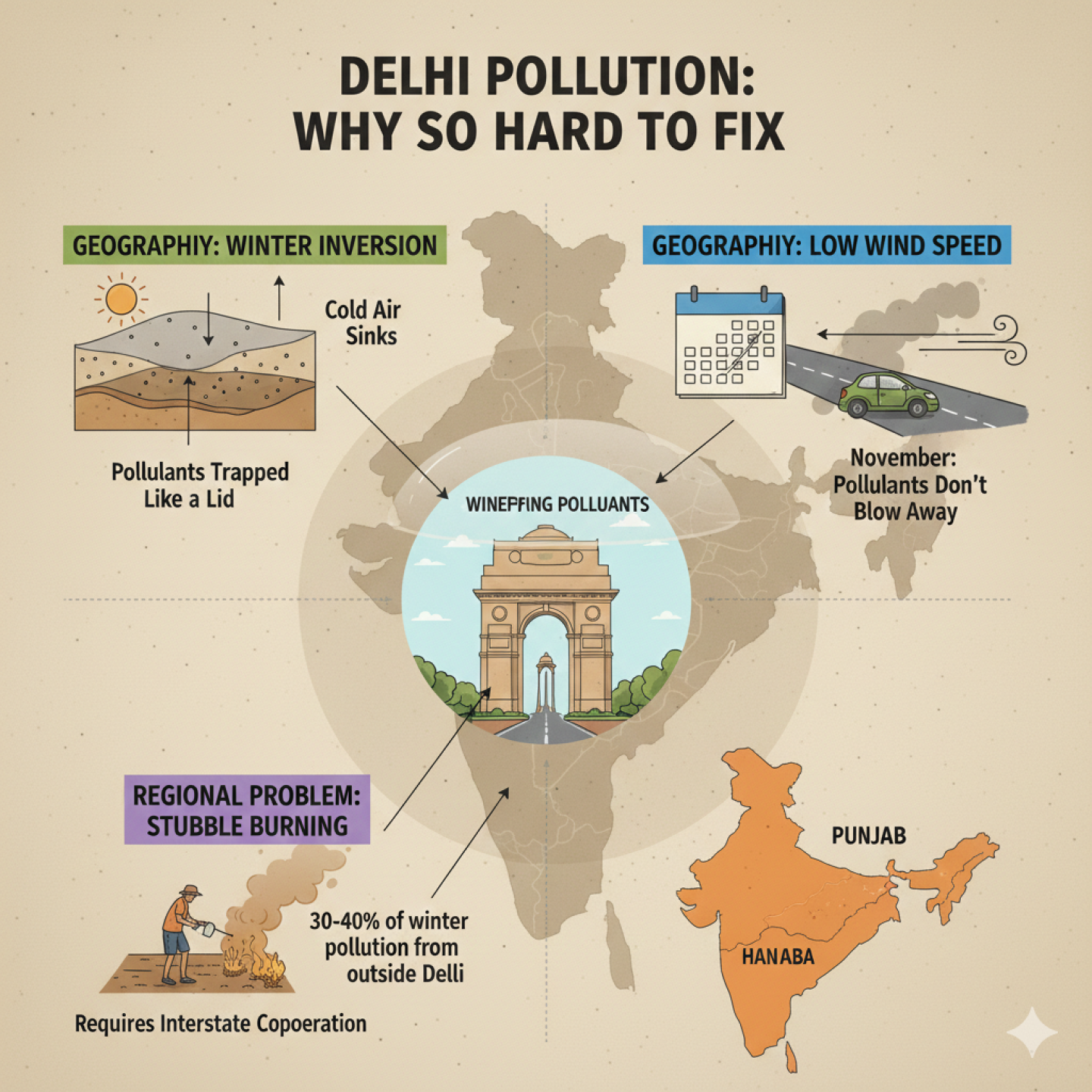
Why is it so hard to fix?
The problem isn't just emissions; it's Geography. Delhi sits in a "basin."
- Winter Inversion: During winter, cold air settles near the ground, trapping pollutants like a lid on a pot.
- Wind Speed: In November, wind speeds drop significantly, meaning pollutants don't "blow away"—they just hang there.
- Regional Problem: Nearly 30–40% of Delhi’s winter pollution comes from outside its borders (stubble burning in Punjab/Haryana), meaning the city cannot solve the problem alone without regional cooperation.